

Contact Routing in the Age of AI
Picture this: you call a company because your order hasn’t arrived. You explain the issue to one agent, only to be transferred to another department. You repeat the story again. Then you’re transferred once more. By the third time, you’re frustrated, the agent is apologetic, and the company has already lost credibility.
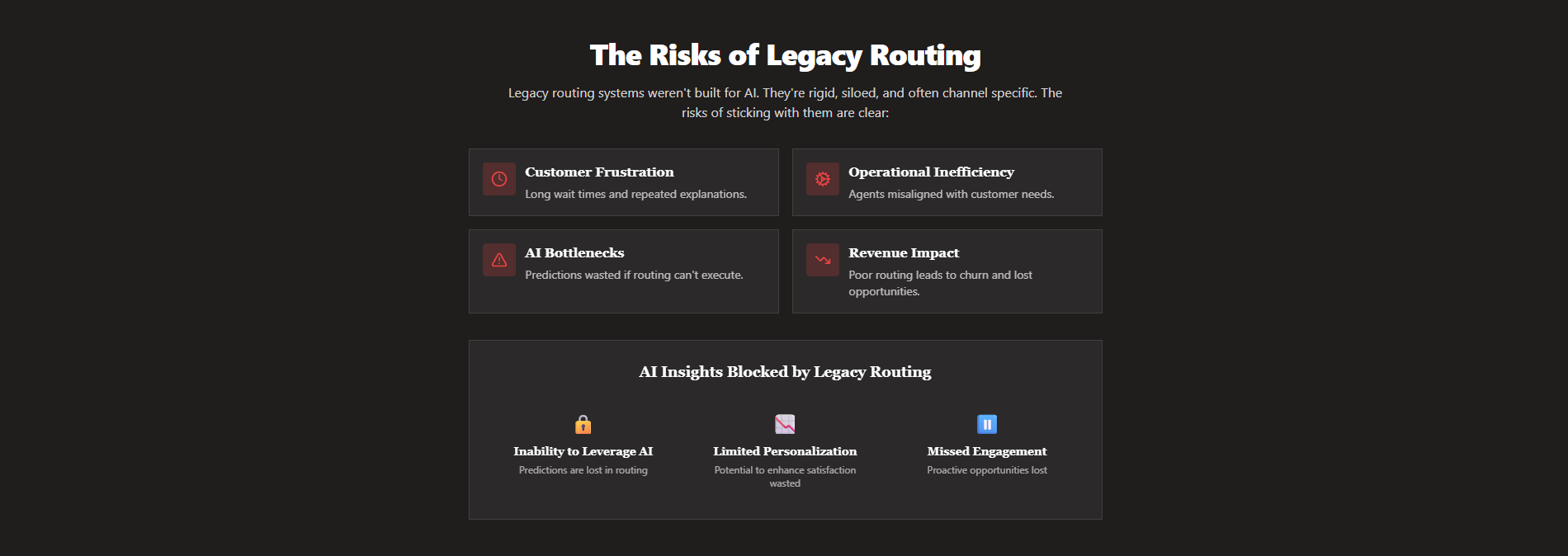
That’s the problem of poor routing. It’s invisible to customers until it fails — and when it fails, it undermines everything else. Now add AI into the mix. Artificial intelligence can predict why you’re contacting the company, analyze your purchase history, and even suggest the best solution before you finish typing. But here’s the catch: if your routing system is outdated, all that AI brilliance stalls. It’s like having a GPS that knows the fastest route but being stuck on a road full of potholes.
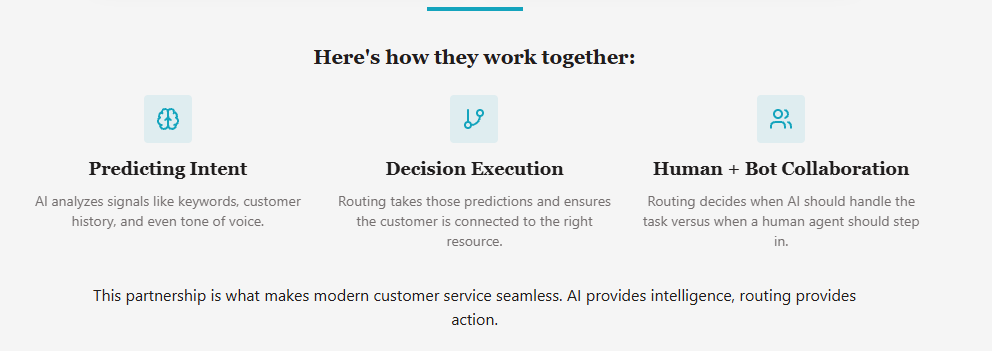
Routing is the backbone of AI-powered customer service. It ensures that when AI makes a decision — whether to send you to a human agent, a self-service bot, or a specialist team — that decision is executed seamlessly. Without modern routing, AI can’t deliver on its promise of faster, smarter, more personalized service.
How AI and Routing Work Together
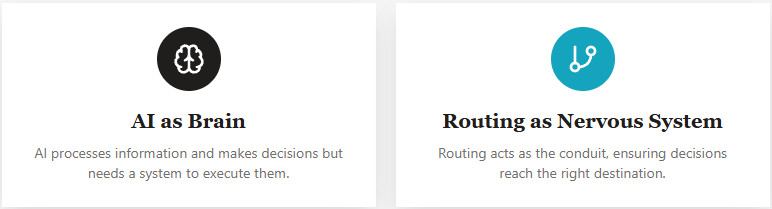
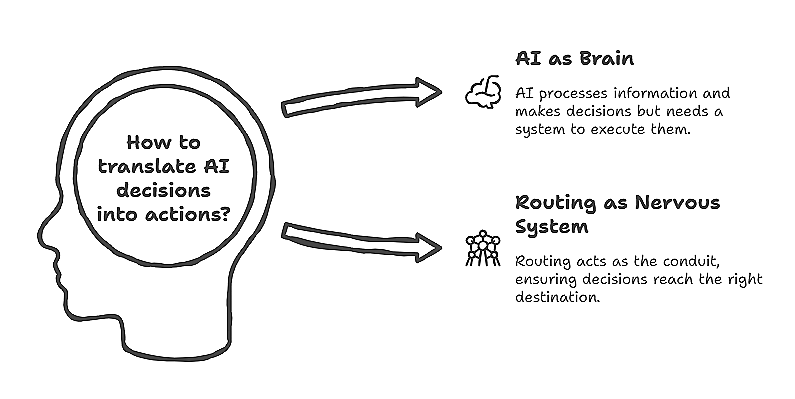
Think of AI as the brain and routing as the nervous system. The brain can process information, predict intent, and decide what should happen next. But without the nervous system, those decisions never reach the right muscles.
Skills-Based Routing: Matches customers to agents based on expertise.
Intent-Based Routing: Uses AI predictions to connect customers to the right solution, even before they ask.
Omnichannel Routing: Ensures consistency across voice, chat, email, and social media.
Ask yourself:
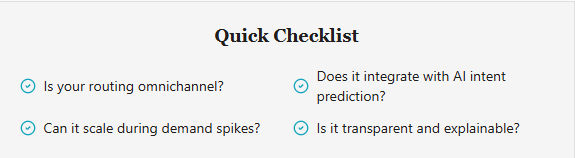
Is your routing omnichannel?
Does it integrate with AI intent prediction?
Can it scale during demand spikes?
Is it transparent and explainable?
Steps to Modernize Your Routing
So, you’re convinced routing matters. The next questions are: How do you modernize it so AI can actually deliver?
Here are the key steps, explained in plain language.
Step 1:
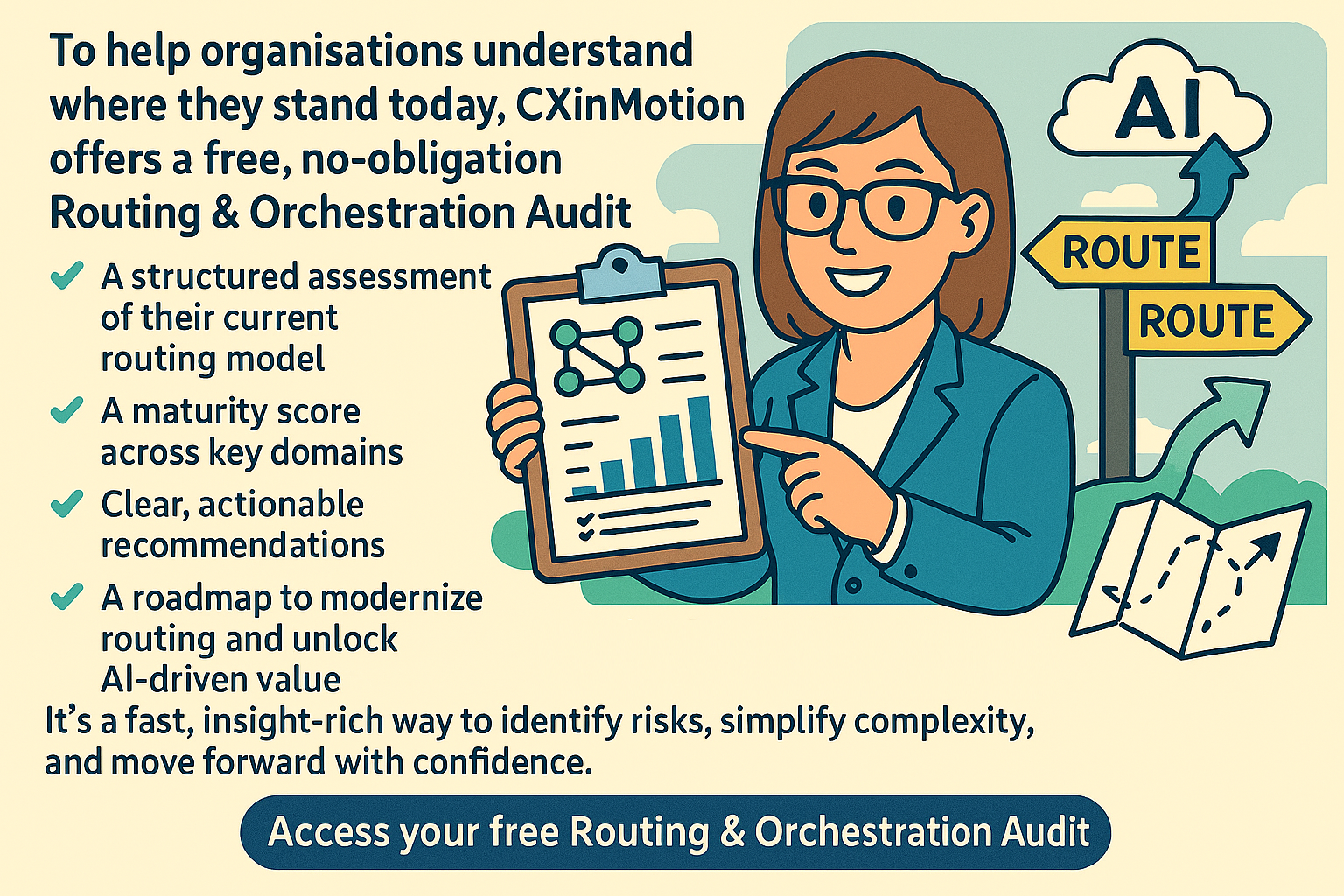
Audit Your Current Systems
Before you can improve, you need to know where you stand.
Map out your existing routing processes: Which channels are covered? How are calls, chats, and emails directed today?
Identify pain points: Are customers repeating themselves? Are agents overloaded with mismatched queries?
Look for silos: Legacy systems often route voice separately from digital channels, creating inconsistent experiences.
“An audit isn’t about finding flaws — it’s about uncovering opportunities. The gaps you identify become the roadmap for AI integration.”
Step 2:
Adopt AI-Ready Platforms
Not all routing systems are built to handle AI. Modern platforms (like Genesys Cloud CX, Microsoft Dynamics, or other leading CX solutions) are designed to integrate AI predictions directly into routing decisions.
Choose platforms that support omnichannel routing.
Ensure they can plug into your CRM and analytics tools.
Look for scalability — you don’t want to replace the system again in two years.
Step 3:
Integrate Your Data Sources
AI is only as smart as the data it can access.
Connect customer history, purchase records, and interaction logs.
Make sure routing decisions are informed by context, not just channel.
Prioritize data security and compliance (GDPR, CCPA).
· Data silos kill AI. If your routing system can’t access customer data, AI predictions are blind.
· APIs are your friend. Modern platforms use APIs to connect systems seamlessly.
Step 4:
Design Escalation Paths
AI can handle a lot, but not everything. You need clear rules for when a customer should be handed off to a human.
Define thresholds: e.g., if sentiment analysis detects frustration, escalate immediately.
Train agents to pick up where AI leaves off, without forcing customers to repeat themselves.
Build hybrid workflows where humans and bots collaborate.
Step 5:
Test and Optimize
Modern routing isn’t a “set it and forget it” system. It’s a living process.
Run pilot programs to see how AI-driven routing performs.
Collect feedback from customers and agents.
Adjust rules and workflow continuously.
Future-Proofing Routing
Once you’ve modernized, the next step is preparing for what’s coming:
Agentic AI: Systems that autonomously orchestrate customer journeys.
Dynamic Routing: Real-time adjustments based on context and customer behavior.
Phygital Experiences: Blending digital AI efficiency with human empathy.
Scalability: Preparing for new channels like voice AI, AR/VR, and even metaverse CX.
Conclusion
Modernized routing is the backbone of AI‑powered customer service. It transforms AI from a promising concept into a practical engine for real‑world outcomes. Without a modern routing foundation, AI remains theoretical — disconnected from the operational realities of queues, skills, journeys, and customer intent. But with it, AI becomes execution: orchestrating seamless, personalized, and scalable experiences at every touchpoint.
“Smart AI needs Smarter Routing.”
© 2026 cxinmotion All rights reserved.